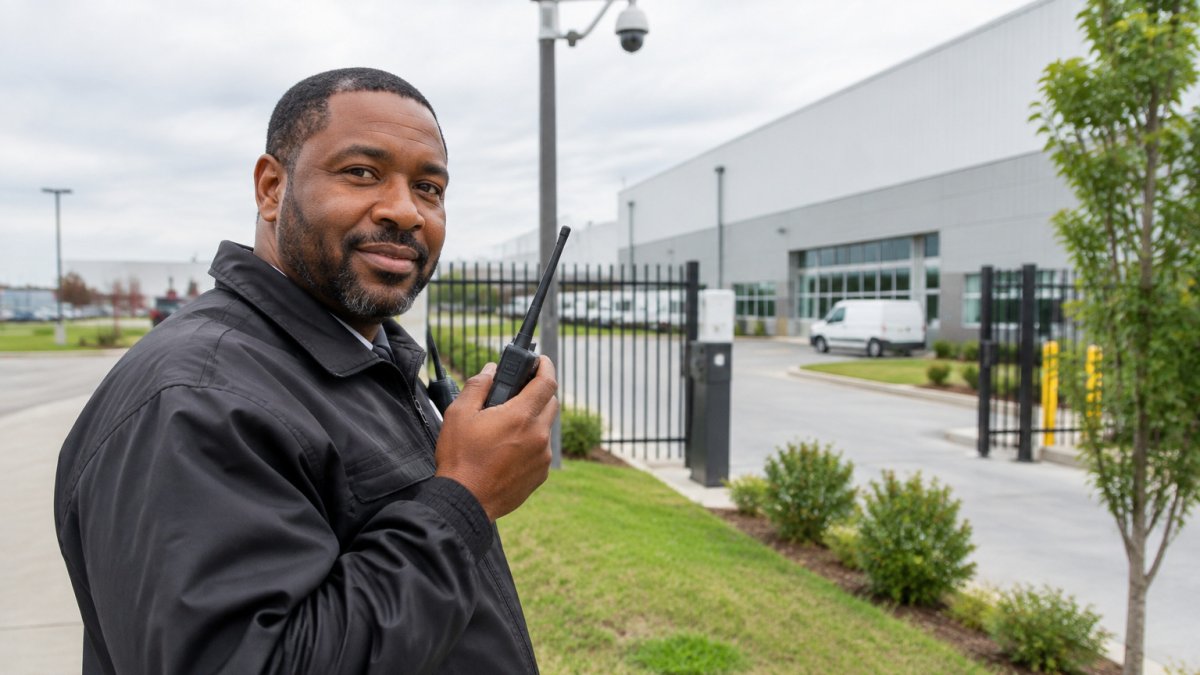
7 Hidden Gaps in 24/7 Security Monitoring for Businesses
Last Updated: November 16, 2026
Quick Summary
24/7 security monitoring for businesses typically covers physical signals such as intrusion alarms, fire and smoke detection, video feeds and access events, received at a central station that can dispatch emergency responders. It usually does not cover email accounts, laptops, cloud applications or network activity, which is why a monitored alarm can still leave real exposure.
- Standard monitoring contracts focus on the physical premises and devices wired into the panel.
- Email accounts, laptops, cloud applications and network activity are typically outside standard monitoring scope.
- Integration gaps between older systems often leave no single party accountable for the full picture.
- Auto renewal clauses with short cancellation windows are a common source of billing disputes.
- Physical security monitoring and cybersecurity monitoring are separate services that address different risks.
Table of Contents
- Why a Monitored Alarm Does Not Always Mean a Protected Business
- What 24/7 Security Monitoring Services for Businesses Actually Cover
- Alarm Monitoring Service for Existing System: Where Integration Gaps Hide
- Small Business Security Systems and the Costs Nobody Mentions Upfront
- How the Security Monitoring Response Process Works After an Alarm
- Why 24/7 Cybersecurity Monitoring for Businesses Is a Separate Question
- Evaluating Whether Your Monitoring Is Working, and Booking Your Assessment
- Frequently Asked Questions
Why a Monitored Alarm Does Not Always Mean a Protected Business
Many business owners assume that once a security system is monitored around the clock, the business is covered. That assumption is understandable. A monitored alarm feels like a safety net, and for many organizations it is one important layer. But monitoring only covers what the system can see, and most businesses have gaps the system never reaches.
A working alarm and a monitoring contract can still leave real exposure. For staff working remotely, the coverage question is worth exploring through managed security services that extend protection beyond the building. The alarm watches the front door and the server closet.
Can a business be monitored and still be exposed? Yes, and the gap usually sits where the physical system ends and the digital environment begins. FBI Internet Crime Complaint Center annual report shows that business email compromise remains one of the costliest online crime categories, and it rarely triggers a physical alarm.
A monitored alarm answers one question well: is someone physically entering the building? It does not answer whether your data, accounts and devices are being watched with the same care. If you are unsure where your coverage ends, a Managed IT Services review can show you exactly which systems are being watched and which are not.
What 24/7 Security Monitoring Services for Businesses Actually Cover
Before you can judge a gap, you need to understand what the service is built to do. 24/7 security monitoring services for businesses typically cover intrusion alarms, fire and smoke signals, video feeds and access events, all received at a central monitoring station that can dispatch emergency responders.
The strength of this model is speed. A signal that arrives at a monitoring center at 2 a.m. gets a response, even when nobody is in the office. Law firms weighing these response processes can review service support built for firms that handle confidential client data. For physical threats, that is a meaningful protection.
The limit is scope. Most monitoring contracts are written around the physical premises and the devices wired into the panel. Clients often assume the contract covers more than it does. Read the service description closely and ask which signals the monitoring center actually receives and acts on.
- Physical intrusion and forced-entry signals
- Fire and smoke detection signals
- Video and access-control events, where installed
- Emergency dispatch when a verified alarm is received
Notice what is missing from that list. Email accounts, laptops, cloud applications and network activity are not on it.
The table below sets out what a typical monitoring contract covers and what it leaves out.
| Signal type | Covered by standard monitoring | Note |
|---|---|---|
| Intrusion and forced entry | Yes | Physical premises only |
| Fire and smoke | Yes | Central station dispatch |
| Video and access events | Where installed | Depends on equipment |
| Email accounts | No | Outside physical scope |
| Laptops and remote devices | No | Leave the building daily |
| Cloud applications | No | Not on the panel |
Alarm Monitoring Service for Existing System: Where Integration Gaps Hide
Many businesses add a monitoring service to a system that was installed years ago. The original installer may have been paid to wire a building, not to connect that building to a modern network. That creates integration gaps, and gaps are where problems hide.
Consider a common situation. A business has a sound physical alarm, but its door access system runs on a separate platform, its cameras store footage on a local recorder, and nobody owns the link between them. When something unusual happens, each system reports to a different person, or to no one.
Integration gaps are rarely dramatic. They show up as a camera that has been offline for weeks, an access log nobody reviews, or a firmware update that was never applied. Businesses that want one accountable team for this kind of coordination often look at Co-Managed IT Support to close those ownership gaps.
A professional evaluation looks at how the existing system connects to the rest of the business. It asks who receives each alert, who acts on it, and whether the systems can even talk to each other. That review is the kind of work that is hard to do well from the inside, which is why many owners bring in outside help.
Is your existing system really working as one system? If you cannot answer that quickly, it is worth an assessment.
Small Business Security Systems and the Costs Nobody Mentions Upfront
Small business security systems often look affordable on paper. The equipment and a monthly monitoring fee seem manageable. What tends to surprise owners are the costs that arrive later, after installation and after the first renewal, and the contract terms that make those costs hard to escape.
Most monitoring agreements are structured around a few moving parts, and understanding them is the difference between a fair deal and a trap.
Watch out: auto renewal clauses with short cancellation windows are one of the most common sources of billing disputes, because the notice period often falls months before the renewal date and nobody is watching for it.
Beyond the core fee, several charges tend to surface later.
Pricing for managed monitoring depends on the size of the site, the number of devices, the level of response, and the contract length. Owners can see how managed IT and monitoring pricing is structured for regulated businesses before booking a conversation.
There is also a risk question hiding inside the cost question. The cheapest option is not always the lowest risk option. Organizations weighing that broader exposure often benefit from a Cybersecurity Compliance Services review alongside their physical monitoring contract.
Triad Cyber Solutions shares current pricing details on its website so you can review the structure before a conversation. Schedule a consultation to compare what you are paying for against what your business actually needs protected.
How the Security Monitoring Response Process Works After an Alarm
When a monitored alarm goes off, the response process begins at the central monitoring station. An operator reviews the signal, attempts to verify it, and decides whether to contact the business or dispatch emergency services.

Most central stations work from a written response plan called an alarm response or dispatch protocol. That plan is usually built during installation and then rarely revisited.
Verification is the part owners understand least. Some providers call the site first and dispatch only after a person confirms a problem. Others use video verification, where an operator reviews camera footage before deciding.
Watch out: a response plan that lists a former employee as the primary contact, or a phone number that no longer works, can stall the entire sequence at the worst possible moment. Contact lists drift, and nobody notices until an incident.
Escalation timelines are worth asking about in writing. How long does the operator spend trying to reach a contact before moving to the next one? What happens if nobody answers?
The process also matters for businesses that handle sensitive information. A physical response does not protect a server that is being accessed remotely at the same moment.
Mapping these response paths helps ensure that no incident falls between two providers. That map is often the first thing that reveals where the real risk sits, and it is a conversation worth having before an alarm ever sounds. Book an assessment to review how your current response plan would actually play out.
Why 24/7 Cybersecurity Monitoring for Businesses Is a Separate Question
Here is the point many owners miss: physical security monitoring and cybersecurity monitoring are different services. One watches doors, glass and smoke. The other watches accounts, endpoints, networks and data movement. Organizations looking for round-the-clock visibility into digital threats often start with Managed Cybersecurity.
A business can have excellent physical monitoring and almost no digital monitoring at all. In that case, a compromised login at midnight may never reach anyone. The alarm stays silent because nothing physical has happened. Endpoint activity is another blind spot, and Workstation Monitoring addresses the laptops and desktops that leave the building every day.
CISA guidance on cybersecurity for small businesses emphasizes that digital threats often begin with ordinary access, such as stolen credentials, and they move quietly. Monitoring for those signals requires a different set of tools and people than the ones used for physical alarms.
For regulated organizations, the distinction carries extra weight. Compliance frameworks and cyber insurers tend to ask about digital monitoring specifically. A monitored alarm alone rarely answers those questions.
Need an honest answer about your digital coverage? That is a question worth putting to a professional, and it is a conversation we are glad to have.
Evaluating Whether Your Monitoring Is Working, and Booking Your Assessment
Having monitoring in place does not guarantee it is working as intended. Systems drift. Contracts get renewed without review. Staff turn over and nobody remembers who owns the alerts. A periodic professional evaluation catches these problems before they become incidents.
A useful assessment looks at the full picture: physical signals, digital signals, the people responsible for each, and the handoffs between them. It asks whether the monitoring you pay for matches the risks your business actually faces, which is a different question from whether the equipment is installed. Organizations that also need help with budgeting and vendor decisions may find Virtual CIO Services useful for keeping that picture current.
Triad Cyber Solutions can walk through that evaluation with you, covering both the physical systems and the digital environment that sits beside them. If you want a clear view of where your protection is strong and where it is thin, book a call to talk through your situation.
Monitoring should cover the whole business, not just the front door. If you are not sure your current setup does, the right next step is a professional look at what is actually being watched. Talk with the Triad Cyber Solutions team about evaluating your monitoring, and find out where the gaps really are before someone else does.
Frequently Asked Questions
Is 24/7 security monitoring worth it for a business?
For many businesses, the answer depends on what is being protected and how quickly a response matters. Round-the-clock monitoring means a trained operator can review an alarm signal at any hour rather than waiting for the next business day. The real question is whether the monitoring covers the right sensors, cameras, and access points, and whether the response steps match your business hours and staffing. A professional review of your current setup can show whether you are paying for coverage that matches your actual risk.
Can a business use a monitoring service with its existing security system?
Sometimes, but compatibility is not guaranteed. Older panels, proprietary communication paths, and cameras that do not feed into a central platform can all limit what a provider can monitor. Before assuming an existing system will work, it is worth having a qualified technician confirm which signals the provider can receive and which devices fall outside the monitored scope.
Do small businesses need 24/7 security monitoring?
Small businesses often have the same exposure as larger ones, including sensitive customer records, cash, equipment, and inventory, but without a dedicated security team. Monitoring can shorten the time between an incident and a response. Whether it is necessary depends on your premises, your hours, and what a loss would cost you. An assessment can help you decide which parts of your operation justify continuous monitoring.
How can a business tell whether its security monitoring is working effectively?
Look at whether alarms are verified before dispatch, whether your contact list is current, whether the provider documents its response process, and whether test signals and reports are reviewed. A system that is installed and monitored may still have blind spots, such as devices that are not connected or cybersecurity monitoring that is handled separately from physical monitoring. A qualified provider can review these areas with you.




